
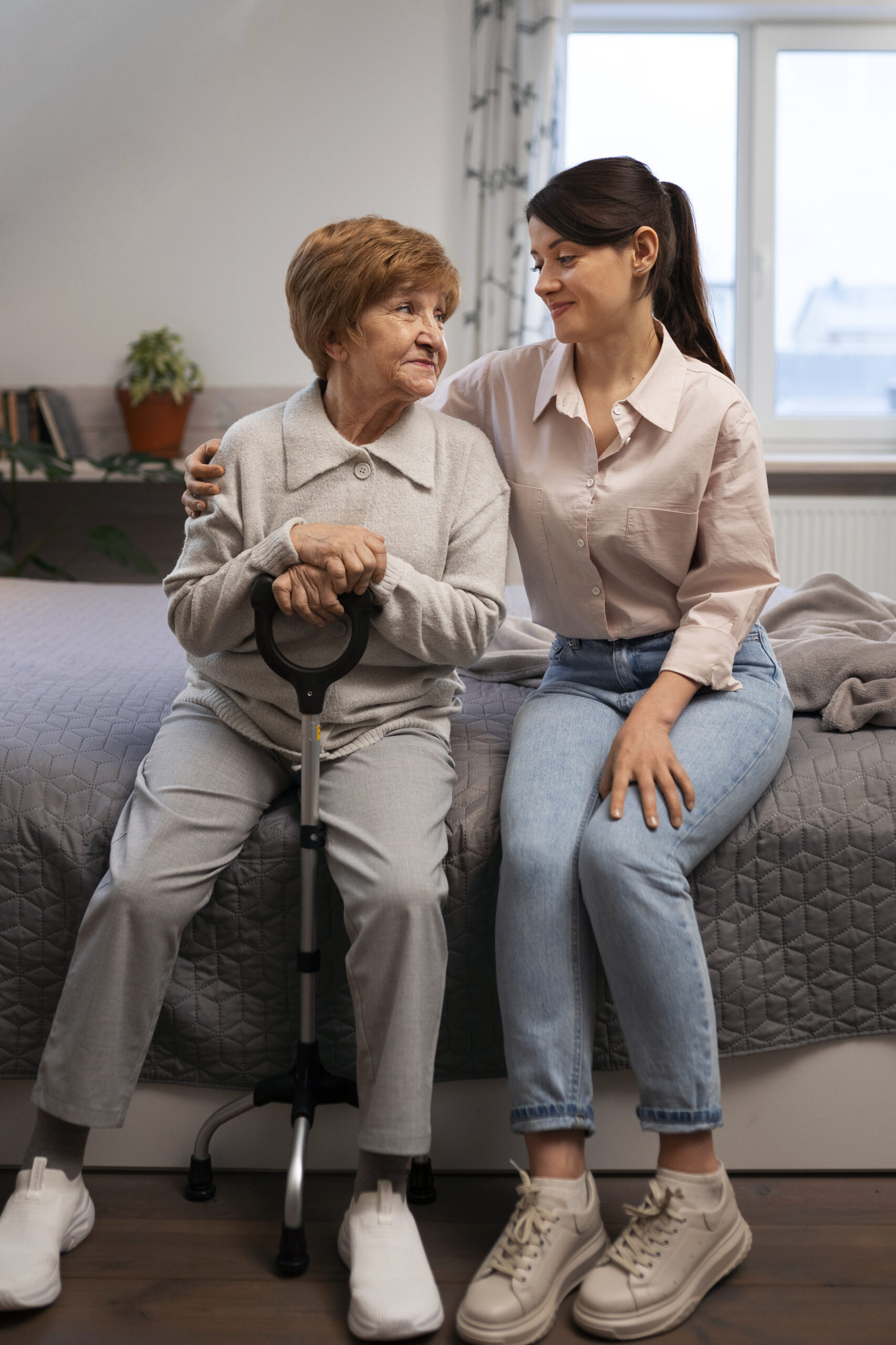
Visiting a care home for an elderly parent or relative is one of those moments where you want to get it right, but it is hard to know what you are actually meant to be looking at. The building looks lovely, someone offers you tea, everyone is friendly, and an hour later you are back in the car park none the wiser. This guide is the antidote to that. It tells you exactly what to notice, what to ask, and what should make you pause, so you can walk in and read the place like someone who knows what good care really looks like.
Before you go: check the inspection report
Do ten minutes of homework before you set foot inside. In England, every care home is inspected by the Care Quality Commission (CQC) and given one of four ratings: Outstanding, Good, Requires improvement or Inadequate. The rating is built from five questions the inspectors ask of every home: is it safe, effective, caring, responsive to people’s needs, and well-led. The full report is free to read on the CQC website and it is far more useful than the headline rating alone, so skim the detail and note anything they flagged.
If you are looking in Manchester, Birmingham or anywhere else in England, the same CQC system applies. The other UK nations work slightly differently. In Scotland the Care Inspectorate grades homes on a six-point scale from 1 (Unsatisfactory) up to 6 (Excellent), judged across several themes rather than one single score. In Wales, Care Inspectorate Wales (CIW) rates homes across four themes — wellbeing, care and support, environment, and leadership and management — as Excellent, Good, Requires improvement or Requires significant improvement. In Northern Ireland the RQIA inspects against whether care is safe, effective, compassionate and well-led. Whichever nation you are in, read the most recent report before you visit, and check it again afterwards to see whether what you saw matches what the inspectors found.
The first five minutes tell you a lot
Trust your senses the moment you walk in. The single most telling thing is how staff and residents are with each other. Do carers greet residents by name? Do they crouch down to talk at eye level, or call instructions across the room? Is there easy chatter and the odd bit of laughter, or does everyone go quiet and busy the instant a visitor appears? Warmth cannot be faked at scale. A home where staff genuinely know the people they look after feels different within minutes.
Then notice the smell. A good home smells of nothing much, or of lunch cooking. A persistent reek of urine, or a heavy floral air freshener clearly masking something, is a real warning sign about how often people are being helped to the toilet and changed. Look at the residents themselves, not just the décor: are they clean, are their clothes their own and properly fastened, is their hair done, are fingernails trimmed? Are people up, dressed and engaged, or slumped asleep in front of a loud television in the middle of the afternoon with no one nearby?
Staffing: the thing that decides everything
Almost every other quality follows from whether there are enough staff who stay long enough to know the residents. You will not get a staffing rota handed to you, but you can read the signs. Count how many carers you actually see on the floor versus how many residents there are. Watch whether call bells get answered or just ring and ring. Notice whether staff look harried and are speed-walking everywhere, which usually means the home is short.
Ask directly how many staff are on during the day and overnight, and how long the people caring for residents have worked there. High turnover and heavy reliance on agency staff are worth probing, because continuity is what lets a carer notice your mum is a bit off-colour today, or remember that your dad takes his tea milky with two sugars.
Bedrooms, bathrooms and shared spaces
Ask to see a resident’s actual room, not just the show room kept pristine for viewings. A good home encourages people to bring their own furniture, photographs and bits and pieces, so rooms feel personal rather than clinical. Check there is a call button within reach of the bed and the chair, and look at whether it is grubby or worn from constant use.
In communal areas and bathrooms, look for the practical safety details that make daily life dignified:
- Grab rails in bathrooms and along corridors, and clear, step-free routes with no trailing cables or trip hazards.
- Handrails on both sides of stairs, a working lift if there is more than one floor, and wheelchair-friendly doorways.
- Clean, private bathrooms that do not smell, with non-slip flooring.
- Secure outdoor space or a garden residents can actually use, not just look at through a window.
- Lounges set up for conversation, with chairs in small groups rather than a silent ring around the walls facing a blaring telly.
Food and mealtimes
If you can, time at least one visit around lunch. Mealtimes reveal more about a home than almost anything else. Is the food freshly cooked and does it actually look appetising? Is there a genuine choice, and can the kitchen handle particular diets, allergies, or cultural and religious needs? Are people who need help to eat being supported patiently and unhurriedly, with someone sitting beside them, rather than being spoon-fed at speed so the staff can move on?
Look at the dining room as a social space. Are residents sitting together and chatting, with tablecloths and proper crockery, or eating alone off trays in their rooms by default? Is water and squash left within easy reach between meals? Good hydration and a sociable table are quiet markers of a home that takes the whole day seriously, not just the medical basics.
Activities and atmosphere
Ask to see this week’s activities, and then look for evidence it actually happens. A laminated timetable on the wall means nothing if the lounge tells a different story. Are there outings, visiting musicians, gardening, baking, exercise, crafts, a hairdresser, links with the local community? Crucially, are activities suited to people living with dementia and to those who would rather stay in their room, not just group bingo that leaves half the residents out?
The atmosphere is the sum of all this. A good home has a gentle hum of life to it. People are occupied, staff have time to stop and chat, and there is a sense that residents are individuals with histories and preferences, not a row of tasks to be completed before the shift ends.
Red flags to watch for
- Strong smells of urine, or air freshener obviously covering something up.
- Residents left unattended, distressed, or calling out with no one responding.
- Call bells ringing unanswered for long stretches.
- Staff who talk over residents, rush them, or speak about them as if they are not there.
- People sitting in soiled or ill-fitting clothes, or looking unwashed.
- A manager who is evasive, will not let you wander, or refuses an unannounced visit.
- A recent inspection report flagging the same problems you can see for yourself.
Good questions to ask
- How do you make sure my relative keeps seeing the same familiar carers?
- What happens if their needs increase — can they stay here, or would they have to move?
- How do you handle medication, and how do you involve the GP, district nurses and dentist?
- How and how often will you keep me updated, and can I visit at any time?
- What are the fees, what exactly do they cover, and what costs extra?
- How do you settle someone in during their first few weeks?
- What do you do when a resident is unhappy or a family raises a concern?
Visit more than once — and turn up unannounced
One booked visit is never enough. Homes naturally put their best foot forward for an appointment, so go back at least once, and try to see the place at different times: a weekday morning when it is busy, a mealtime, and ideally an evening or weekend when staffing is often thinnest. If you can, drop in unannounced. A home that genuinely welcomes you turning up out of the blue, no warning, no fuss, is usually a home with nothing to hide. How they react to that alone can tell you most of what you need to know. Take someone with you too, because two people notice twice as much, and bring the person who will be living there if they are able to come.
When you are ready to draw up a shortlist, CareFinder makes it easy to compare local homes in one place, completely free. Browse care homes in Bristol, Liverpool, London and towns and cities across the UK, then go and see your favourites in person with this checklist in hand. Start your search at thecarefinder.co.uk and find the right home for someone you love.